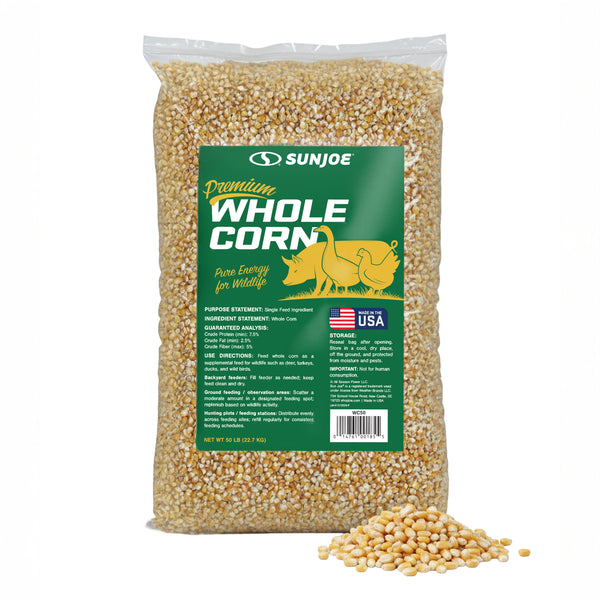
WC50 Premium Whole Corn Feed
100% Natural | All-Season | 50 lb Bag

Meet the WC50 Premium Whole Corn Feed

Why It Stands Out
Clean & Premium Quality
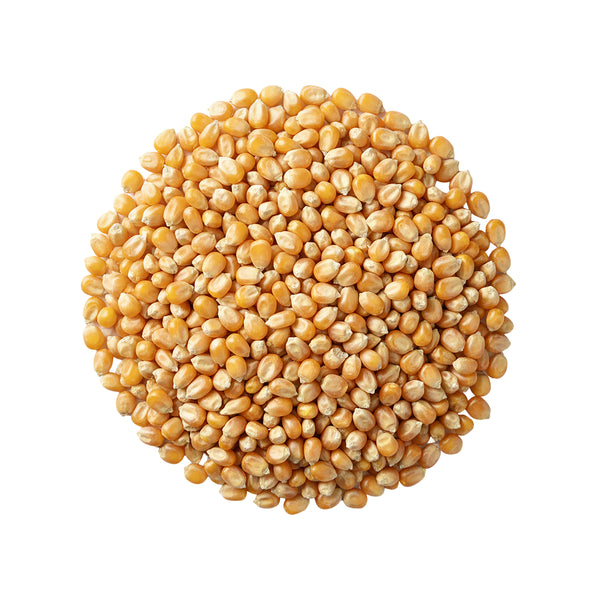
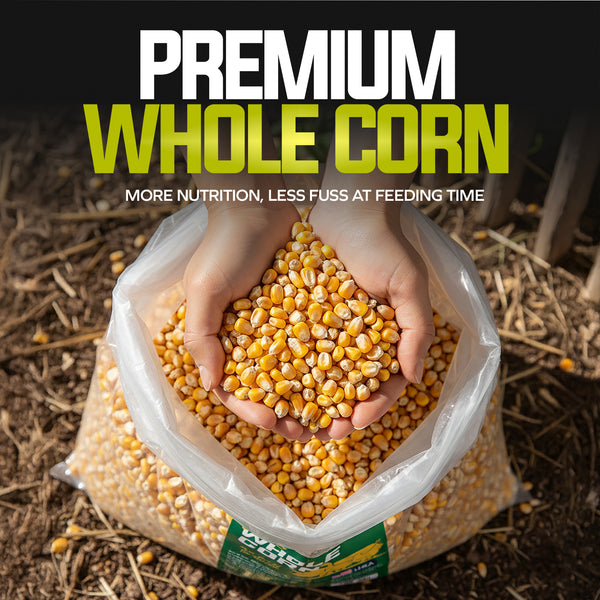
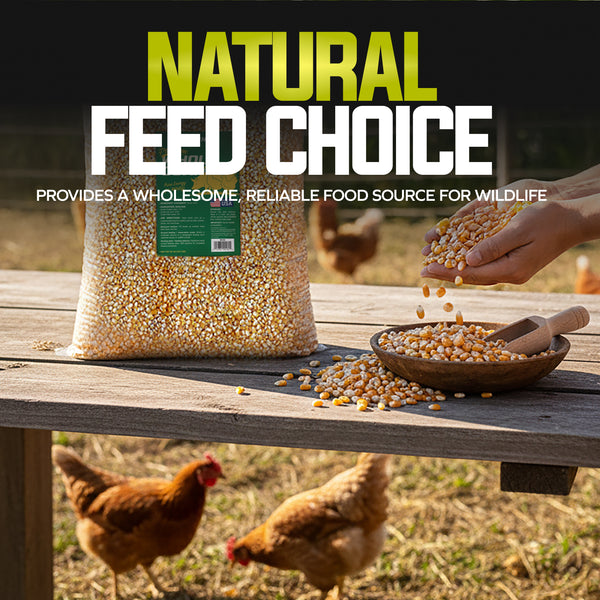
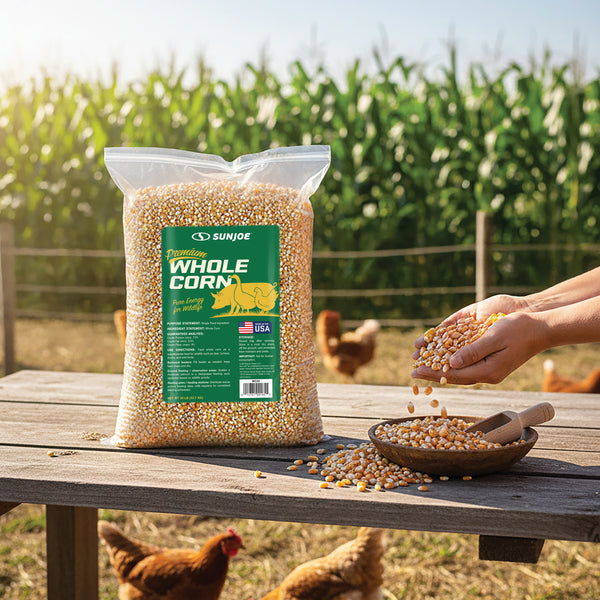
100% Whole Corn Kernels
No broken pieces, fillers, or mixed grain — only complete whole corn kernels from selection to bag.
No Additives or Fillers
100% natural whole corn — no preservatives, artificial ingredients, or low-value filler grain mixed in.
High-Energy Nutrition
Natural Carbohydrate Energy
Corn is naturally rich in carbohydrates — providing the sustained energy animals need for daily activity and thermoregulation.
Cold-Weather Performance
High-energy carbohydrate content makes WC50 especially valuable in winter — helping animals maintain warmth and energy in freezing conditions.
Guaranteed Nutritional Analysis
Crude Protein min. 7.5% · Crude Fat min. 2.5% · Crude Fiber max. 5% — consistent nutrition you can count on.
Practical Feeding Advantages
Low Dust Formula
Kiln-drying significantly reduces dust — cleaner handling, cleaner feeders, and easier cleanup after every fill.
Moisture-Resistant
The drying process removes excess moisture, helping the corn resist clumping, mold, and spoilage during storage.
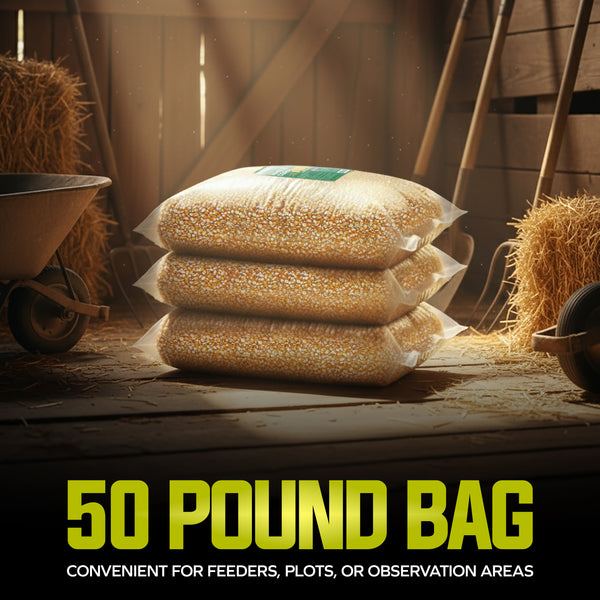
50 lb Bulk Supply
A large 50 lb bag reduces how often you need to restock — ideal for consistent daily feeding routines with multiple animals.
How It's Processed
Every bag of WC50 goes through a consistent three-step quality process before reaching you:
Compatible Animals
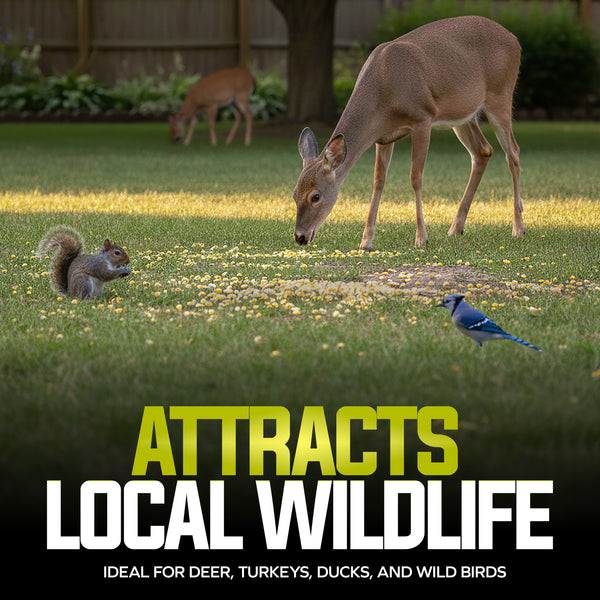
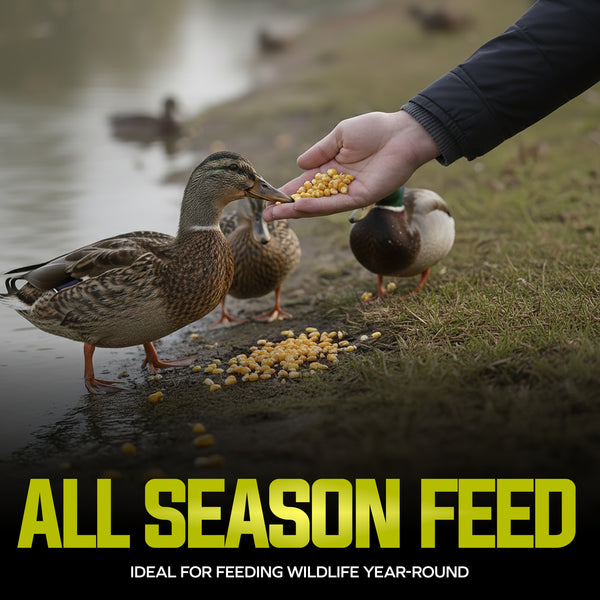
The WC50 is suitable for a wide range of backyard poultry and wildlife species. Note that it is a supplemental feed — not a complete diet. It should complement, not replace, a balanced nutritional program for each species.
Compatible Feeder Types
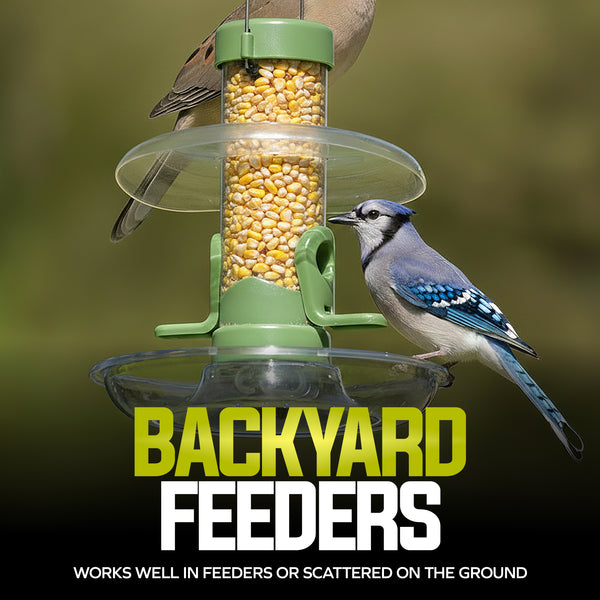
Gravity Feeders — whole corn flows freely through standard gravity-style tube and hopper feeders without clogging
Troughs & Pans — can be placed directly in any open trough, platform feeder, or flat feeding pan
Ground Feeding Areas — scatter directly on clean, dry ground in areas where animals naturally gather and forage
Spin Feeders — compatible with most timer-based spin or broadcast feeders used for deer and wildlife
Technical Specifications
| Specification | Details |
|---|---|
| Model Number | WC50 |
| Product Type | Whole Corn Feed |
| Net Weight | 50 lbs (22.7 kg) |
| Composition | 100% whole corn kernels |
| Processing | Washed, screened, kiln-dried |
| Additives | None |
| Dust Level | Low dust |
| Moisture | Moisture-resistant |
| Season | All-season use |
| Feed Type | Supplemental — not a complete diet |
| Compatible Animals | Chickens, deer, ground birds, squirrels, turkeys, wildlife |
| Compatible Feeders | Gravity feeders, troughs, ground feeding, spin feeders |
| Storage | Cool, dry place; keep sealed |
| Warranty | Consumable product — no standard warranty |
What's in the Box
- 1 × 50 lb bag of Sun Joe® WC50 Premium Whole Corn Feed (100% whole corn, no additives)
How to Use — Step by Step
-
Choose your feeding method
Select a gravity feeder, trough, ground feeding zone, or spin feeder. Position it in an area where your target animals naturally gather or travel — near cover, water sources, or established wildlife trails.
-
Dispense an appropriate amount of feed
Pour a measured amount into the feeder or feeding area. For poultry, offer a handful per bird as a supplement alongside their complete feed. For wildlife, start with 1–2 lbs per feeding location and adjust based on observed consumption.
-
Monitor consumption
Check feeders regularly. If feed is disappearing quickly, increase the quantity. If feed is sitting uneaten or accumulating, reduce the amount to prevent spoilage and waste.
-
Maintain a consistent routine
Animals thrive on consistency. Refill at the same time each day when possible — regular feeding helps attract and retain wildlife and keeps poultry on a predictable schedule.
-
Keep feeding areas clean
Remove old, wet, or moldy corn from feeders and feeding areas before refilling. Clean feeders periodically to prevent buildup and bacterial growth.
Seasonal Feeding Tips
Spring & Summer
- Natural food sources are abundant — reduce corn supplementation to avoid overfeeding wildlife
- Hot, humid weather accelerates spoilage — check feeders more frequently and use smaller fill amounts
- For backyard poultry, corn is a great warm-weather treat but limit to 10% of daily diet to avoid nutritional imbalance
Fall
- Deer feeding activity increases in fall as animals build fat reserves for winter — ideal time to increase feed volume
- Turkeys and ground birds actively forage for corn in fall — ground scattering in cleared areas works well
- Begin consistent feeding schedules in early fall to establish wildlife patterns before hunting season (if applicable)
Winter
- Corn's high carbohydrate content is most valuable in winter — it provides the energy animals need to maintain body heat in cold conditions
- Increase feed volumes during heavy snow events when natural foraging is limited
- Check feeders after snowfall — clear snow from feeder openings and ground areas so animals can access the feed
- Store extra bags in a dry, frost-protected area — corn quality is maintained even in cold storage
Care & Storage
- Store in a cool, dry place — a garage, barn, shed, or storage room away from moisture
- Keep the bag sealed when not in use — humidity is the primary cause of clumping and mold
- For opened bags, fold the top tightly and secure with a clip, or transfer to an airtight container or metal bin with a lid
- Protect from pests — store in a rodent-proof container or metal trash can if mice or rats are a concern in your storage area
- Do not store directly on concrete floors — elevate on a pallet or shelf to prevent moisture wicking through the bag
- Inspect the bag periodically for signs of moisture, mold, or pest intrusion — discard any corn that is discolored, has an unusual odor, or shows visible mold
- Properly stored, whole corn maintains its quality for 6–12 months or longer
Troubleshooting
Possible Causes
- Corn left in a wet or uncovered feeder
- Rain or condensation entering the feeder
- Too much corn added at once — sitting longer than 24 hours
Solutions
- Remove all old and moldy corn before refilling — never mix old and new
- Use a covered or weatherproof feeder to protect corn from rain
- Fill feeders with smaller amounts more frequently in wet weather
- Clean the feeder thoroughly with warm water and allow to dry before refilling
Possible Causes
- Feeder location not in an active wildlife area
- Human scent or activity near the feeder
- Abundant natural food sources reducing interest
Solutions
- Relocate feeder closer to cover, trails, or established wildlife zones
- Minimize human presence near the feeder, especially during dawn and dusk feeding hours
- Be patient — it may take 1–2 weeks for wildlife to discover a new feeding location
- Try ground scattering near the feeder to draw initial attention
Possible Causes
- Overfeeding — too much corn dispensed at once
- Animal population lower than expected
- Feed spoiling before animals can consume it
Solutions
- Reduce portion size — offer only what animals consume within 24 hours
- Switch to a timer-controlled spin feeder for more precise portion control
- Clear uneaten corn before refilling to prevent buildup
Possible Causes
- Bag exposed to humidity or moisture during storage
- Bag stored on a damp floor
Solutions
- Break up clumps — the corn is still usable if no mold is present
- Transfer to an airtight sealed container or metal bin
- Elevate storage off the floor on a pallet or shelf
- Inspect for any mold or unusual odor — discard if present
Possible Causes
- Feeder placed in an open area accessible to all wildlife
- Ground scattering attracting non-target animals
Solutions
- Use elevated or squirrel-resistant feeders if targeting only certain species
- Remove ground-scattered corn after each feeding session
- Accept that whole corn is attractive to a wide range of wildlife — consider this a benefit or use a species-specific feeder
Possible Causes
- Bag left open or improperly stored, causing moisture to degrade kernels
- Normal fine residue settling at the bottom of the bag or feeder
Solutions
- Keep bag sealed and stored dry — the kiln-dry process minimizes dust when properly stored
- Clean feeders with a dry brush or blow out residue before refilling
- Discard the bottom of the bag if heavily dusty or damp
Quality & Satisfaction
NATURAL
Sun Joe® WC50 is a consumable agricultural product — it does not carry a
traditional product warranty.
If you receive a bag that appears contaminated, has an unusual odor indicating
spoilage in transit,
or has a packaging defect, contact Sun Joe® customer support for assistance.
The WC50 contains
100% whole corn kernels — no additives, fillers, or artificial ingredients.
Natural variation in kernel color and size is expected and does not indicate
a quality issue.