Handle light-to-medium outdoor cleaning with the Sun Joe SPX2000-H Electric Pressure Washer, a compact 9.4-pound unit with two quick-connect spray nozzles and an included foam cannon.
Meet the SPX2000-H
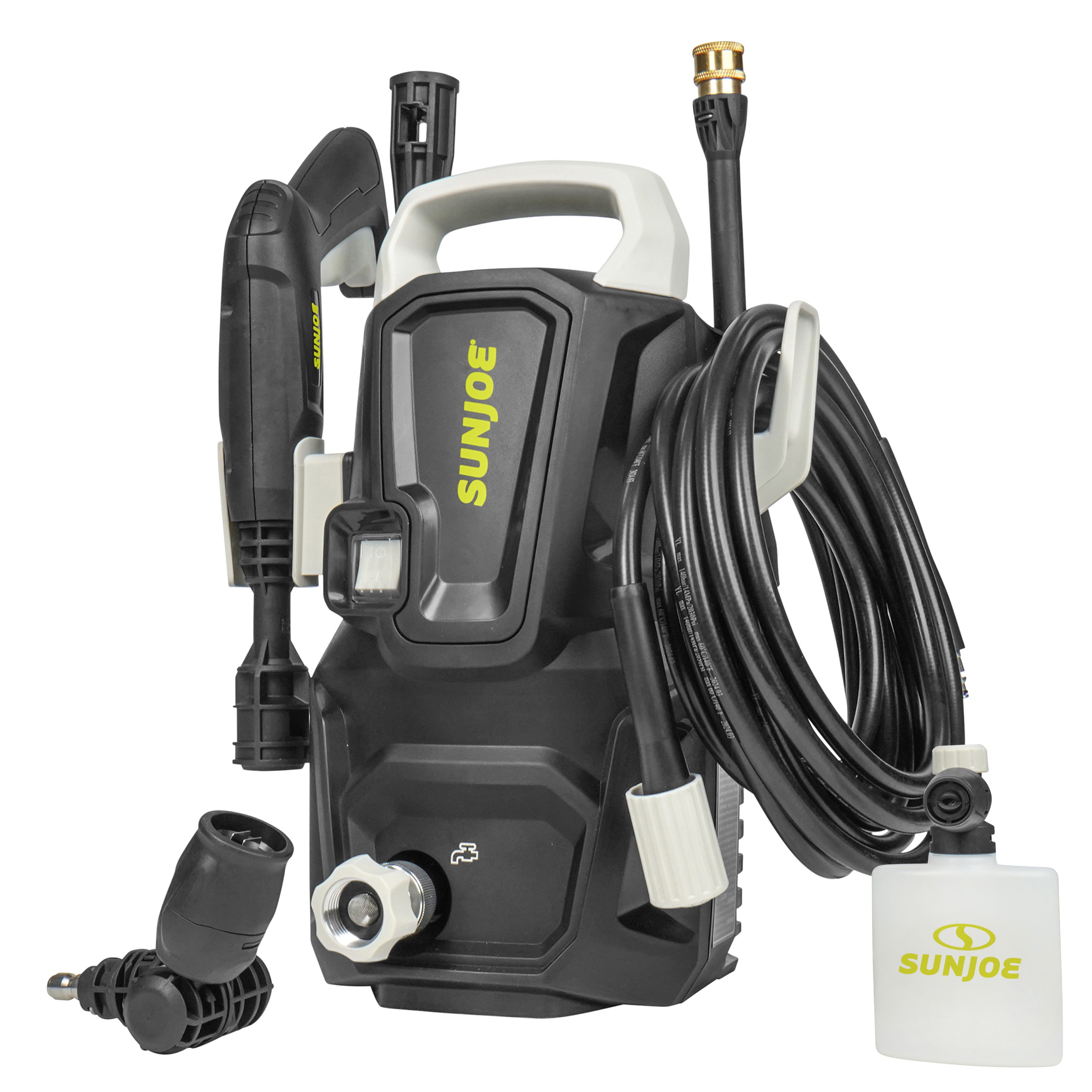
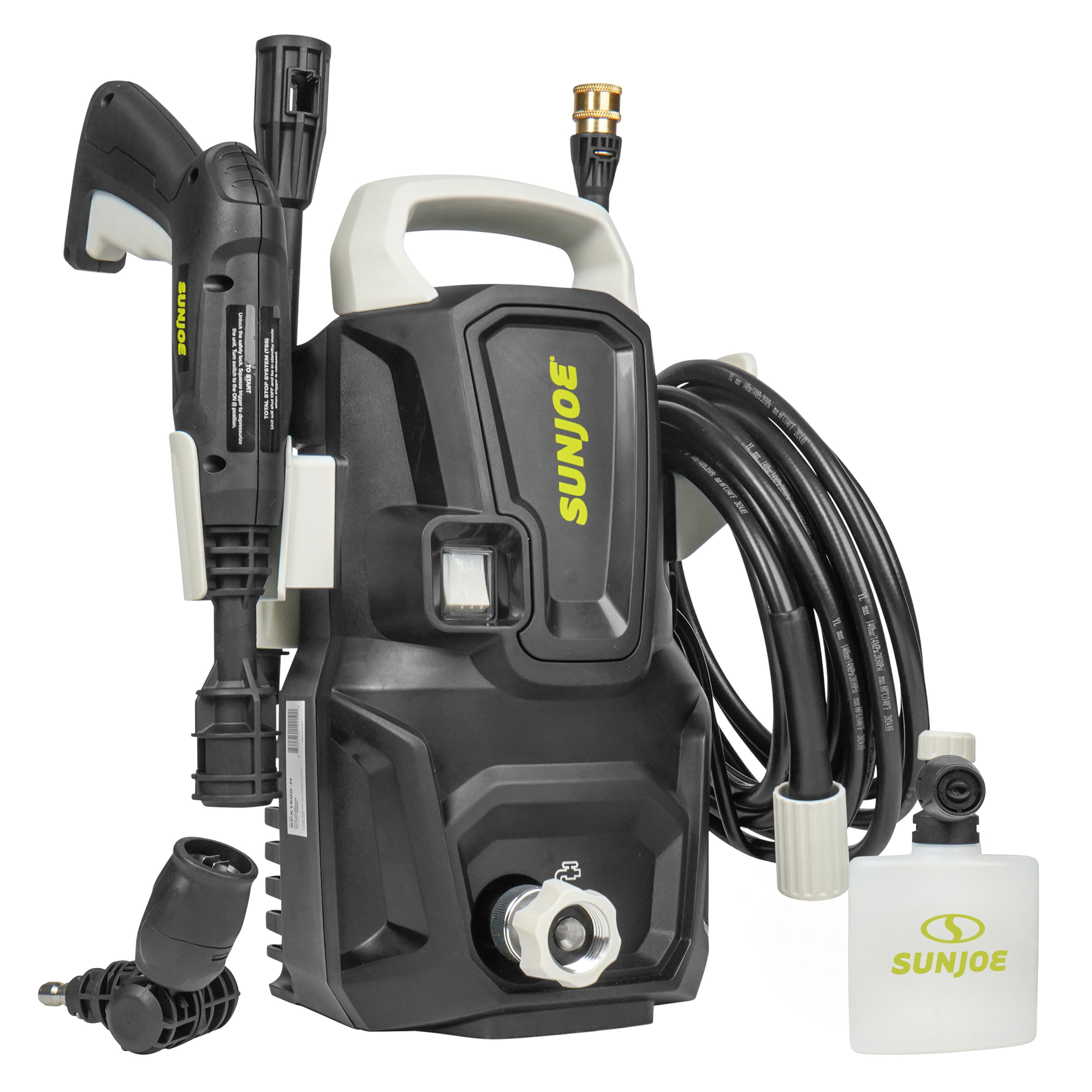
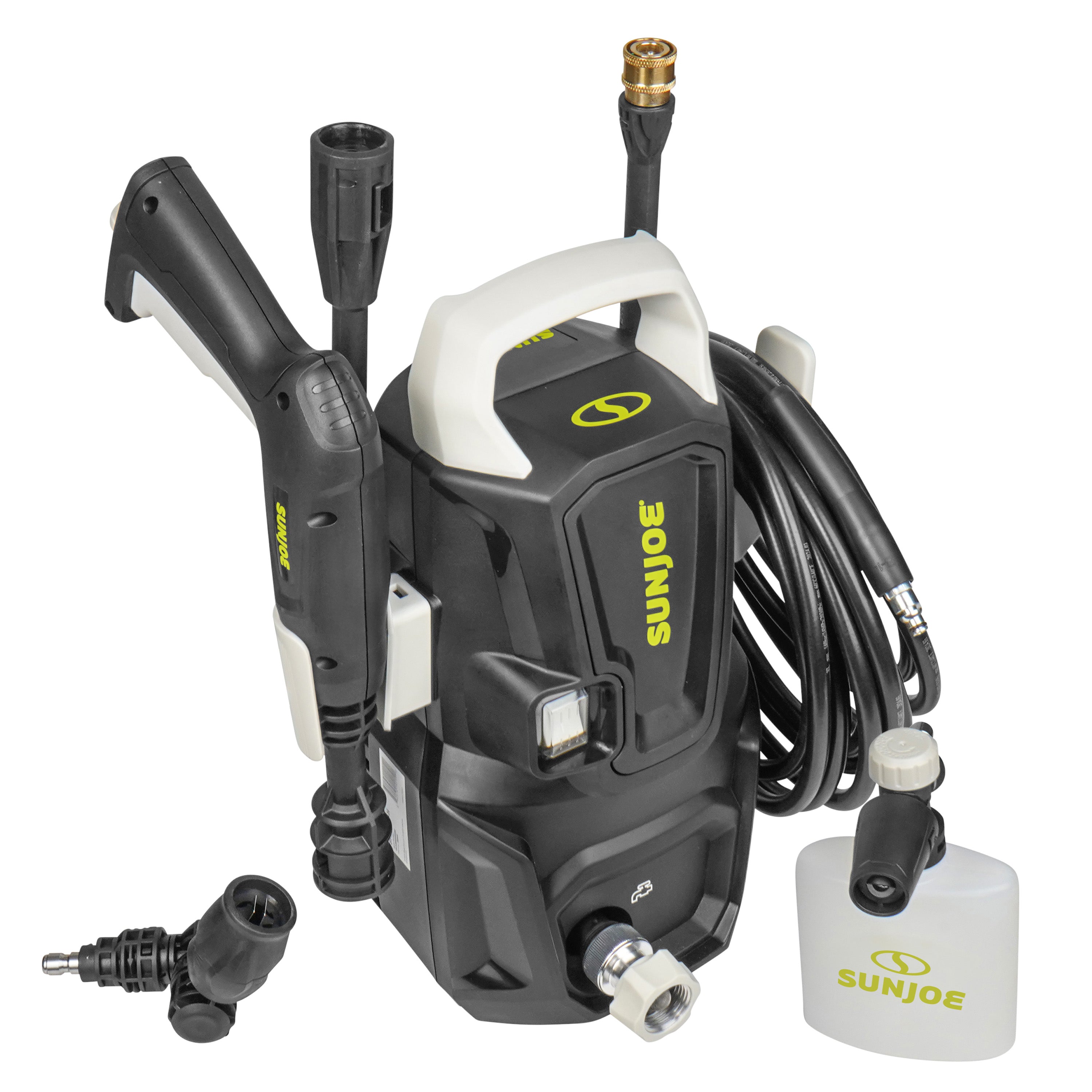

Why It Stands Out
Compact cleaning power
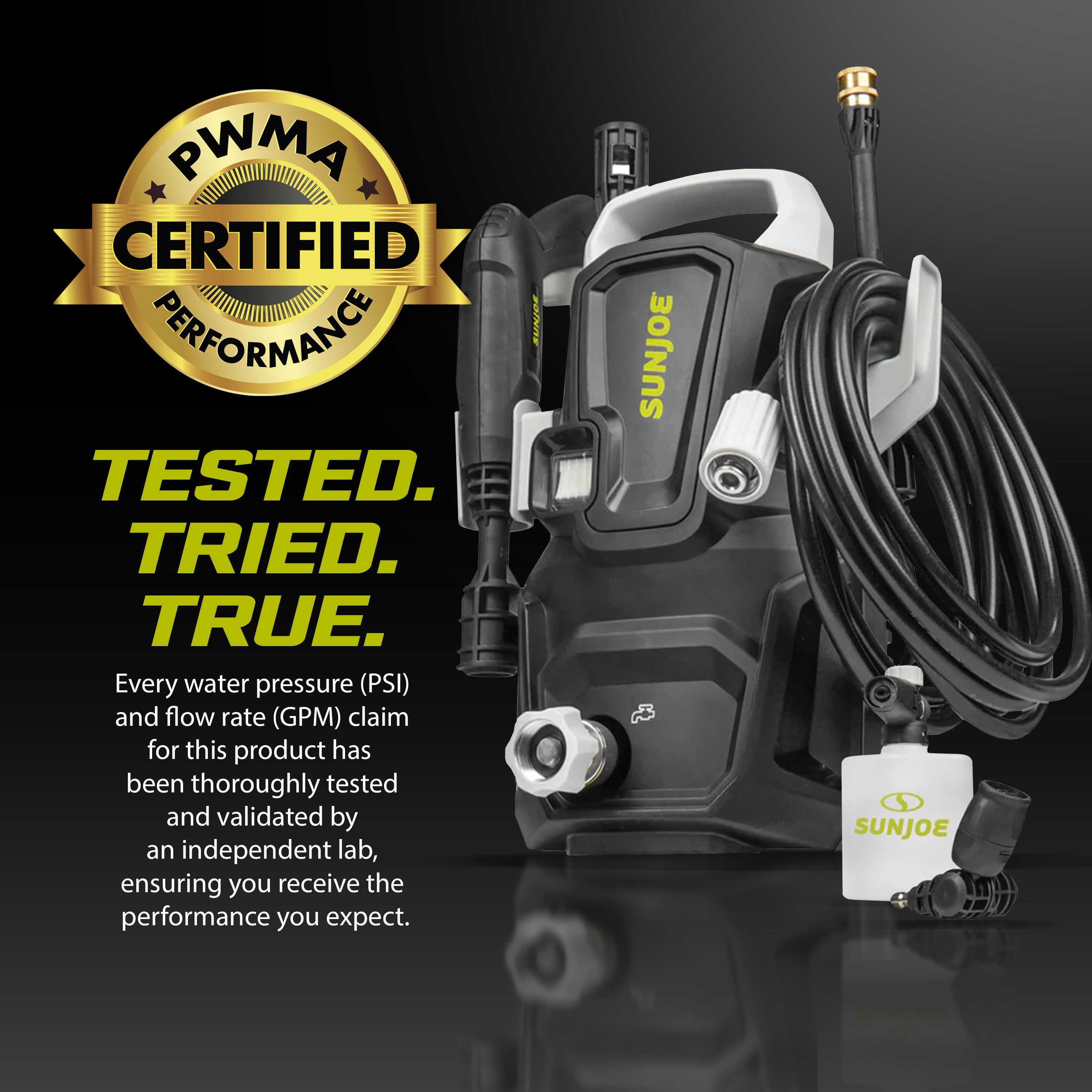
The 13-amp motor delivers 1500 PSI and 1.1 GPM under typical load.
Two spray patterns
Use the 15° nozzle for tough jobs and the 40° nozzle for gentler cleaning.
Foam cannon included
The 12-fluid-ounce bottle applies non-corrosive detergent formulated for pressure washers.
Lightweight reach
A 20-foot pressure hose and 35-foot GFCI power cord pair with a portable 9.4-pound frame.
Technical Specifications
| Specification | Details |
|---|---|
| Model | SPX2000-H |
| Product Type | Corded electric pressure washer |
| Rated Voltage | 120V AC, 60 Hz |
| Motor | 13 amp |
| Maximum Pressure | 2000 PSI at initial discharge per CSA internal pressure testing |
| Rated Pressure | 1500 PSI under typical load |
| Maximum Flow | 1.7 GPM with nozzle open at minimum pressure |
| Rated Flow | 1.1 GPM under typical load |
| Quick-Connect Nozzles | 15° and 40° |
| High-Pressure Hose | 20 ft (6 m) |
| Power Cord | 35 ft (10.7 m) with GFCI |
| Foam Cannon Capacity | 12 fl oz (0.35 L) |
| Maximum Water Inlet Temperature | 104°F (40°C) |
| Maximum Water Inlet Pressure | 0.7 MPa |
| Net Weight | 9.4 lb (4.25 kg) |
| Product Manual | Download the SPX2000-H operator’s manual (PDF) |
| Warranty | 2-year manufacturer’s warranty |
What’s in the Box
- SPX2000-H electric pressure washer
- Handle
- Nozzle base
- Garden hose adapter
- Cord holder
- Trigger gun and holder
- Spray wand assembly
- Quick-connect lance
- 15° and 40° quick-connect nozzles
- 20-foot high-pressure hose
- 12-fluid-ounce foam cannon bottle
- Needle clean-out tool
- Two handle screws and two nozzle-base screws
- Manual with registration card
Assembly
- Install the handle. Slide it into the upper alignment grooves from front to back with the solid side facing forward, then secure it with the two supplied handle screws.
- Install the nozzle base. Slide it into its alignment grooves and secure it with the two supplied nozzle-base screws.
- Attach the holders. Slide the trigger gun holder and cord holder fully into position.
- Assemble the spray wand. Fit the wand into the trigger gun and rotate the end piece until locked, then join and rotate the two wand sections until fully locked.
- Install a nozzle. Pull back the quick-connect collar, insert the selected nozzle, and release the collar until the nozzle clicks into place.
- Connect the high-pressure hose. Snap one end into the trigger gun, then push the other end fully onto the washer’s water outlet and thread it clockwise.
- Connect the water supply. Attach the garden hose adapter to the inlet, connect a reinforced garden hose with at least a 1/2-inch internal diameter, and attach the hose to the water source.
Getting Started
- Confirm the controls. Place the washer upright on a secure, stable surface and make sure the motor switch is OFF.
- Connect electrical power. Plug the washer into a suitable outlet and press RESET on the GFCI until its power light illuminates.
- Prime the system. Fully open the water supply, unlock the trigger, and squeeze it until the water flow is steady and trapped air is discharged.
- Start the washer. Keep the trigger pressed while moving the switch to ON; the motor runs when the trigger is squeezed and stops when it is released.
- Clean safely. Keep the nozzle directed away from people, pets, electrical equipment, and the washer, and test the spray on an inconspicuous area first.
- Shut down. Switch the washer OFF, unplug it, close the water supply, squeeze the trigger to release pressure, disconnect the hoses, and engage the safety lock.
Nozzle Selection
- 15° yellow: A focused fan spray for tough cleaning jobs on durable surfaces.
- 40° gray: A wider spray for gentler cleaning.
Using the Foam Cannon
- Select the correct cleaner. Use only suitable, non-corrosive detergent recommended for pressure washers.
- Fill and attach the bottle. Add the detergent, attach the bottle to the trigger gun, and twist clockwise to lock it in place.
- Apply from bottom to top. Apply detergent to the dry surface and let it work briefly without allowing it to dry.
- Rinse the surface. Remove the foam cannon after switching off and depressurizing the washer, install the appropriate nozzle, and rinse thoroughly.
Maintenance, Care & Storage
- Switch off, unplug, shut off the water, and release stored pressure before cleaning or maintenance.
- Inspect the power cord, fittings, trigger gun, and high-pressure hose regularly. Never use or attempt to mend a damaged high-pressure hose.
- Remove the inlet filter and rinse it with warm water to prevent debris from clogging the pump.
- Remove a blocked nozzle, clean its opening with the supplied needle tool, and rinse it.
- Store the washer and accessories indoors in a dry, covered, frost-free area, and empty water from the pump, hoses, and detergent bottle before storage.
- For winter or long-term storage, disconnect all water connections, briefly run the washer until remaining pump water exits, and switch it off immediately. Use a non-corrosive, non-toxic pump protector, then flush the washer thoroughly with clean water before reuse.
Troubleshooting
The pressure washer will not start
Possible Causes
- The washer is unplugged, the outlet is defective, the GFCI needs resetting, a fuse has blown, or an extension cord is defective.
Solutions
- Plug into a working outlet, inspect the cord, reset the GFCI, and try another outlet.
- Replace the fuse, switch off other equipment on the circuit, and try the washer without an extension cord.
Pressure fluctuates
Possible Causes
- The pump is drawing air or internal valves or seals need service.
Solutions
- Check that hose connections are airtight. If the issue continues, stop using the washer and contact support; do not open the pump housing.
The washer stops during use
Possible Causes
- A fuse has blown, supply voltage is incorrect, the thermal sensor activated, or the nozzle is partially blocked.
Solutions
- Replace the fuse, switch off other equipment on the circuit, and confirm the voltage matches the model tag.
- Let the washer cool for five minutes and clean the nozzle.
The fuse blows
Possible Causes
- The fuse rating is too low for the washer’s amp consumption.
Solutions
- Use a circuit with the appropriate fuse rating and try the washer without an extension cord.
The washer pulsates
Possible Causes
- Air is in the inlet hose, the water supply is inadequate, the hose is kinked, or the inlet filter or nozzle is blocked.
Solutions
- Hold the trigger until regular pressure returns, confirm adequate water flow, straighten the hose, and clean the inlet filter and nozzle.
The washer starts and stops by itself
Possible Causes
- The pump or spray gun is leaking, or the trigger mechanism is damaged.
Solutions
- Stop using the washer and contact support. Do not attempt an internal repair.
The washer starts, but no water comes out
Possible Causes
- The pump, hose, or accessories are frozen; the water supply is disconnected; or the inlet filter or nozzle is blocked.
Solutions
- Allow frozen parts to thaw, connect and fully open the water supply, and clean the inlet filter and nozzle.
Frequently Asked Questions
Which nozzles are included?
The SPX2000-H includes a 15° yellow quick-connect nozzle for tougher cleaning and a 40° gray nozzle for gentler cleaning.
Can I use hot water?
No. Use clean cold or lukewarm water only, and do not exceed 104°F (40°C).
Can I use an extension cord?
An extension cord is not recommended because the washer includes a 35-foot GFCI power cord. Using an extension cord may cause voltage drop, power loss, and overheating.
Why does the motor stop when I release the trigger?
The Total Stop System automatically stops the motor when water flow stops, helping protect the pump and save energy.
What detergent can I use?
Use only suitable, non-corrosive detergent specifically recommended for pressure washers. Never spray acids, bases, solvents, or flammable material.
Where are the model and serial numbers?
The model and serial numbers are printed on the decal located on the pressure washer housing.